Define working at height - a guide to safety measures and fall arrest systems
At Floorspan Contracts, safety is paramount, and working at height is one of the most critical safety considerations in construction. Following the strict guidelines set by the Health & Safety Executive (HSE), we ensure every measure is taken to protect workers and avoid unnecessary risk.
Understanding working at height
So, what exactly does it mean to “work at height”? According to the HSE, working at height includes any work where, without safety precautions, a fall could result in serious injury. This can mean tasks done on ladders, scaffolding, elevated platforms, or even tasks where individuals are required to reach above ground level to perform their duties. Importantly, the HSE emphasises avoiding work at height wherever possible, underscoring the priority of safety and the need to take precautions if working at height is unavoidable.
At Floorspan, we integrate these standards across all projects to ensure safe operations from planning to execution. By strictly adhering to HSE guidelines, we ensure that our workforce and partners are safeguarded against fall risks, no matter the site or scale of the project.
Types of fall arrest systems for safe working at height
To meet these high safety standards, Floorspan Contracts uses several fall arrest systems designed to reduce the risk of injury if a fall occurs. Below are some of the most effective systems and their pros and cons.
Safety Nets
Safety nets are widely used on construction sites as a primary fall arrest system, providing a physical barrier that prevents workers and objects from reaching the ground in the event of a fall. Here’s how they work:
Limited applicability to certain construction projects and locations, often more suitable for commercial or industrial work than residential projects.
Require secure, stable installation for the project’s entire duration, meaning they are best suited for projects with consistent site access and layout.
Air Bags
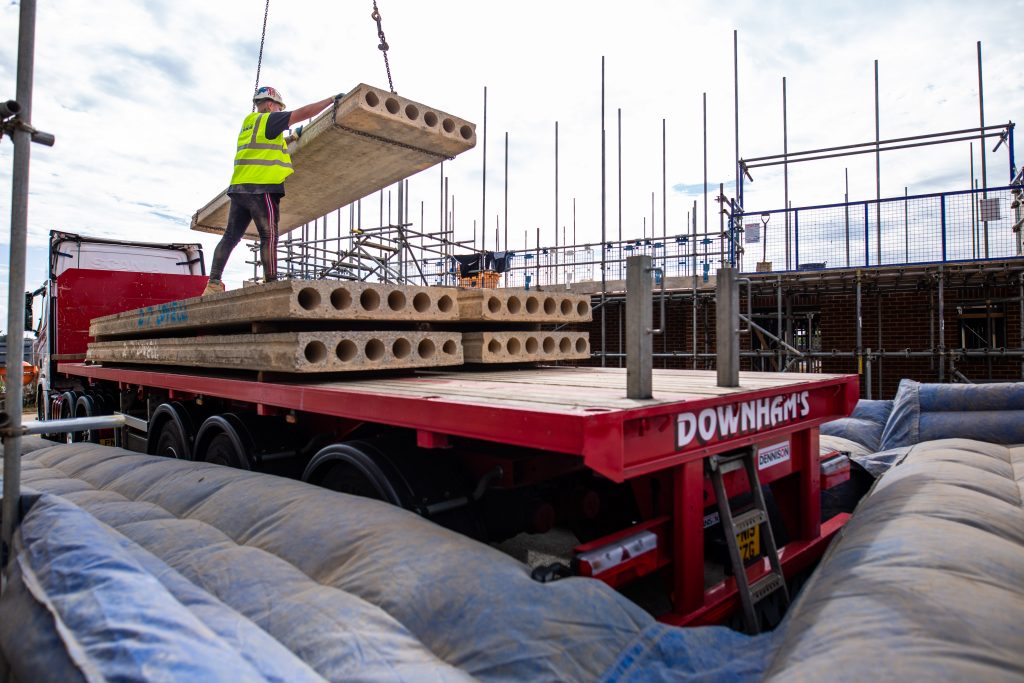
Air bags are another common choice for fall protection, particularly valued for their versatility and ease of use. Unlike safety nets, they offer more flexibility and can be used on different types of construction sites.
Can obstruct movement on the ground level, requiring careful planning to avoid interference with other site activities.
Typically best suited for specific phases of construction and may not offer the ideal protection for all working-at-height scenarios.
Safe Decking / Platform Decking / Crash Decking
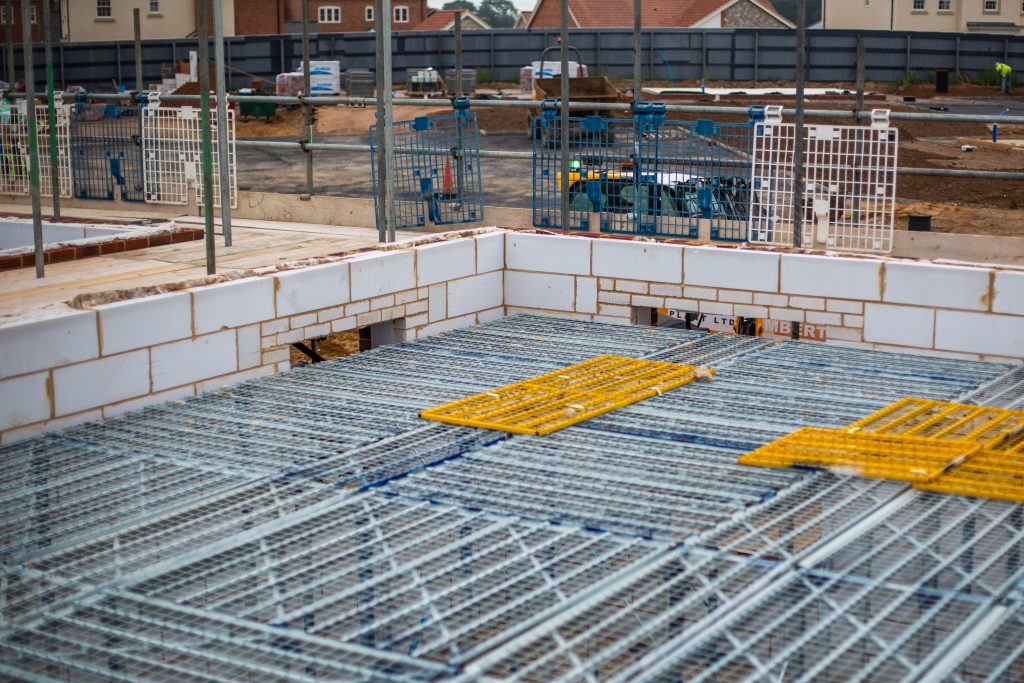
Platform decking, or “crash decking,” elevates the ground level to create a secure working platform, effectively reducing fall distances and protecting workers from falls.
Requires more onsite effort to set up and dismantle, which can increase installation time.
Limits the available ground-level workspace during deployment, meaning it may need to be scheduled around other project phases.
Prioritising SAFETY WHEN WORKING AT HEIGHT
Floorspan Contracts is dedicated to ensuring that all safety precautions are in place, with a clear focus on avoiding work at height wherever possible. When working at height is necessary, our team’s approach combines expert risk assessment, site-specific planning, and the highest industry standards in fall arrest technology. By using trusted systems like safety nets, air bags, and platform decking, we minimise risk and keep projects running safely and smoothly.
With a strong safety culture and commitment to compliance, Floorspan Contracts continues to lead in providing safe, efficient solutions for all construction needs involving working at height.
This website may use cookies to improve your experience, please either: AcceptReject You can also read more about our privacy policy Read More
Privacy & Cookies Policy
Privacy Overview
This website uses cookies to improve your experience while you navigate through the website. Out of these cookies, the cookies that are categorized as necessary are stored on your browser as they are as essential for the working of basic functionalities of the website. We also use third-party cookies that help us analyze and understand how you use this website. These cookies will be stored in your browser only with your consent. You also have the option to opt-out of these cookies. But opting out of some of these cookies may have an effect on your browsing experience.
Necessary cookies are absolutely essential for the website to function properly. This category only includes cookies that ensures basic functionalities and security features of the website. These cookies do not store any personal information.